
Class A vs Class B CDL: The Ultimate Deep Dive for California Drivers (2026)
Stuck between Class A and Class B? We compare weight limits, salaries, training costs, and lifestyles to help you choose the right commercial driver license for your future.
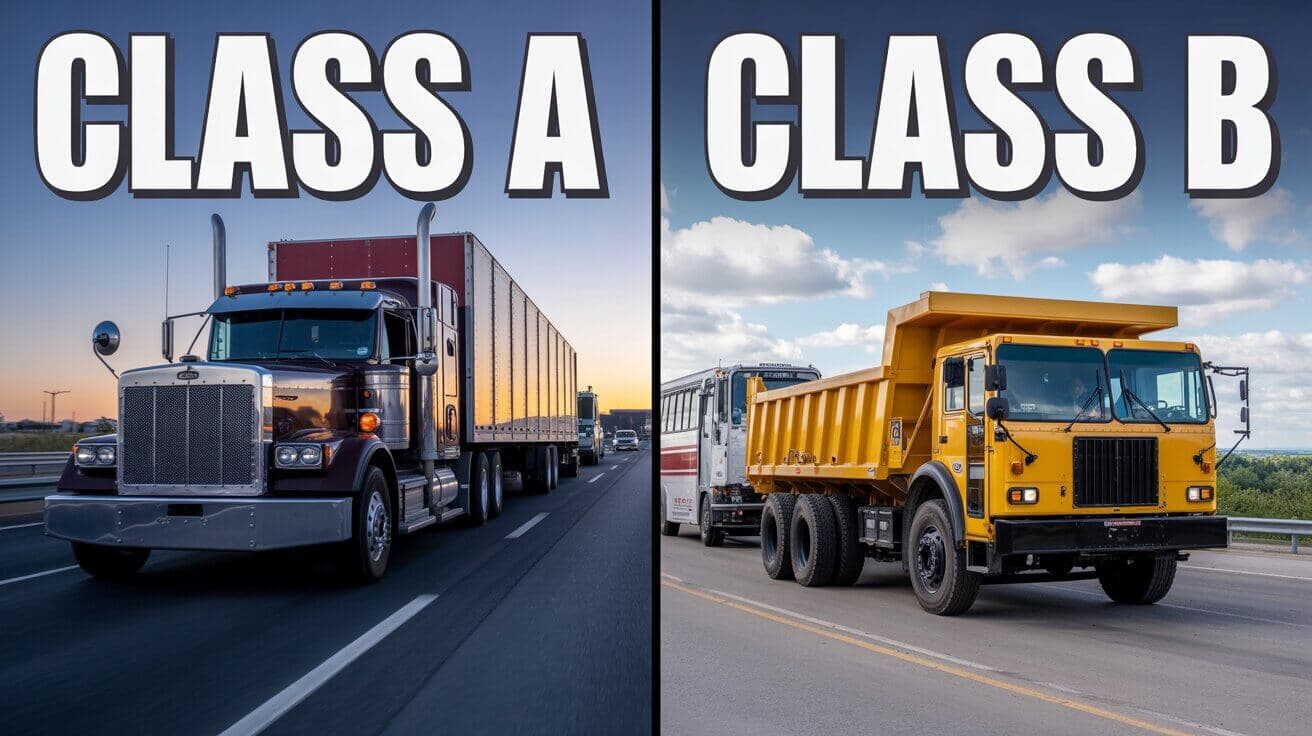
In the California trucking world, the most expensive mistake you can make isn't a wrong turn—it's choosing the wrong license class before you even start school. This decision will define your income and your freedom for the next decade.
Every year, thousands of aspiring drivers in Los Angeles, Fresno, and Sacramento ask the same question: class a vs class b cdl, which one is actually better? On the surface, it looks like a simple choice between a "big truck" and a "smaller truck." However, in the high-stakes California job market of 2026, this decision is far more complex. It dictates your daily stress levels, your time spent away from home, and a salary difference that often exceeds $20,000 or $30,000 per year.
Launching a trucking career requires a significant investment of time and money. Whether you are looking at a class a or b cdl, the regulations from the California DMV and the federal government (FMCSA) have never been more rigorous. This guide is a deep dive into the technical, financial, and lifestyle differences between the two. We will explore insurance preferences, the impact of the ELDT mandate, and the true cost of upgrading later. If you are currently holding a commercial driver license or transitioning from a standard license, this is the most important career decision you will make.
1. Technical Breakdown: Weights, Axles, and GCWR
To truly understand the class a or b cdl requirements, we have to look at the physics and the legal weight classifications that govern California highways. Commercial vehicles are classified by weight, specifically the Gross Vehicle Weight Rating (GVWR) and the Gross Combination Weight Rating (GCWR). These aren't just numbers; they are the legal boundaries of your authority.
The Class B Limit: The Single-Frame Rule
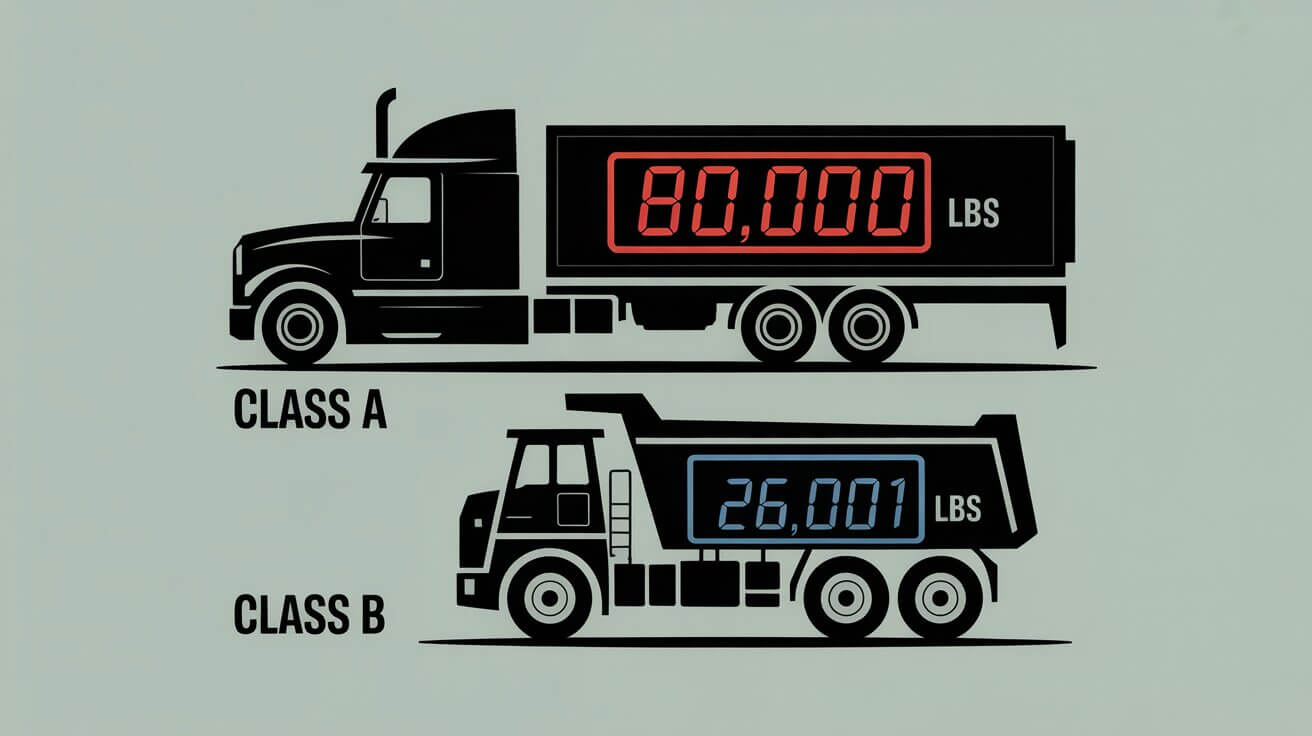
A Class B license allows you to operate any single vehicle with a GVWR of more than 26,001 lbs. This classification is designed for "straight trucks" where the engine and the cargo area are part of the same chassis. You are permitted to tow a trailer, but there is a strict legal ceiling: you are only towing 10,000 lbs or less. If that trailer weighs 10,001 lbs, your Class B is legally insufficient, and you are driving out of class—a major violation in California.
The Class A Authority: Combination Vehicles
The Class A CDL is the "Master License." It allows you to operate any combination vehicles with a GCWR of 26,001 lbs or more, provided the towed vehicle (the trailer) is heavier than 10,000 lbs. This is the license required for the classic 18-wheeler. The technical complexity here is much higher because of the fifth-wheel coupling system. You are managing "off-tracking," where the trailer follows a shorter path than the tractor during turns. This requires a skill called "squaring the turn," something that drivers with only a class c driver license background find extremely difficult to master.
2. What Can You Actually Drive? Vehicle Comparison
The difference between class a and b cdl often comes down to the diversity of the equipment you can handle. A Class A license is "permissive," meaning it includes all the privileges of Class B and Class C. If you have a Class A, you can legally drive a Class B dump truck. However, the reverse is not true.
The Class A Arsenal: Heavy Freight
- Tractor-Trailer (Dry Van): The standard 53-foot trailer used for 70% of American freight.
- Flatbeds: Used for hauling construction steel, machinery, and oversized loads that require complex tie-down and winching skills.
- Livestock Carriers: Specialized trailers that require a Class A to handle the shifting weight of live animals.
- Tankers: Transporting thousands of gallons of liquid fuel or chemicals. This requires a Class A plus an "N" or "X" endorsement.
- Doubles and Triples: Pulling two or three trailers at once, common for LTL companies like UPS or FedEx. See our Doubles/Triples and air brake guide to add the T endorsement.
The Class B Specialist: Local Infrastructure
- Dump Truck: Essential for California's massive infrastructure and road construction projects in the Inland Empire.
- Box Truck: Large-scale local delivery for furniture, appliances, and food distribution.
- Bus vs Truck: Class B is the primary license for city transit buses, tour buses, and school buses. This requires the "P" (Passenger) and "S" (School Bus) endorsements.
- Cement Mixers: High-stability vehicles used in construction that require precision driving but stay local.
If you are still unsure where you fit in this hierarchy, our Guide for Beginner Drivers explains the transition from a car license to these professional machines.
3. The Earning Potential: Salary Comparison in CA (2026)
Let's talk about the commercial driver license salary. In 2026, California leads the nation in driver pay, but there is a clear hierarchy based on the license class. Because Class A involves more technical risk and often more time away from home, the entry level pay is significantly higher to attract talent.
Breaking Down California Wages
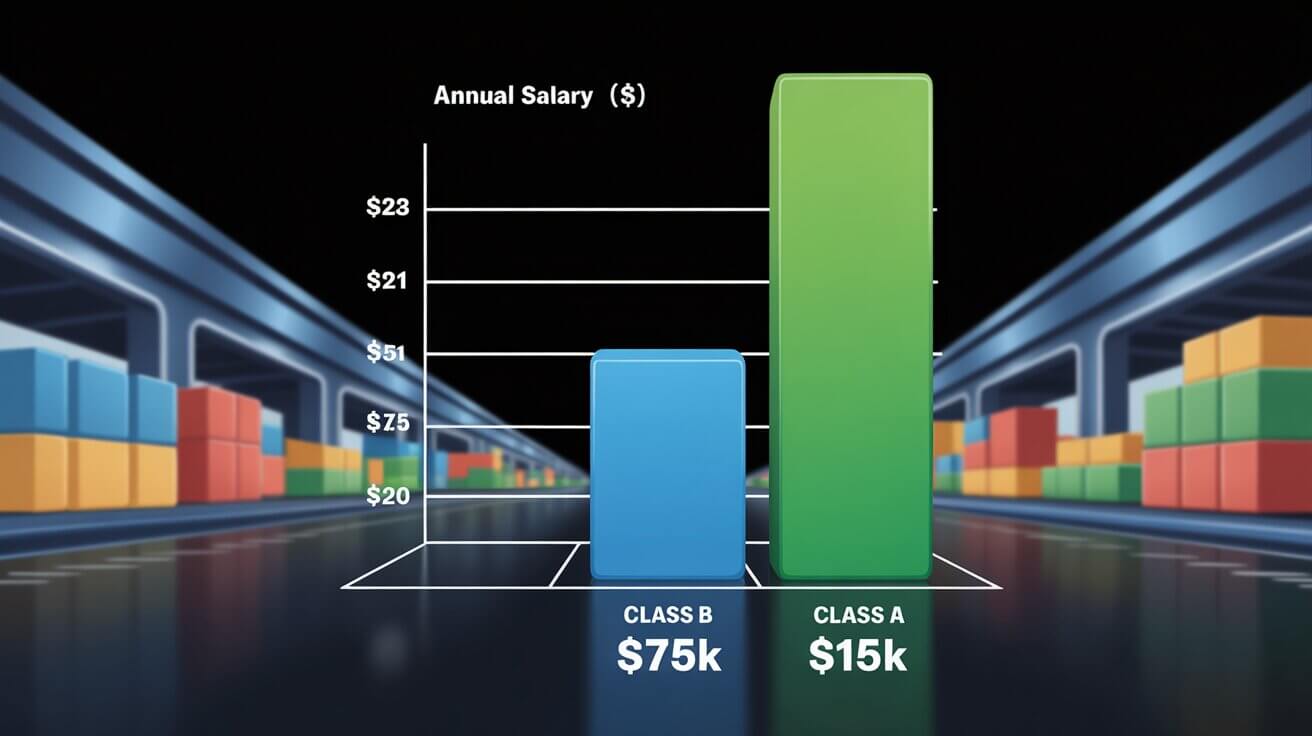
The California wages for drivers are influenced by the state's high cost of living and the "AB5" labor laws. A Class B driver in a local delivery role typically starts between $25 and $32 per hour. However, a Class A driver working OTR vs local freight often sees a different pay structure. OTR drivers are paid by the mile (averaging $0.65 to $0.80 per mile in 2026), while local Class A drivers in LTL roles can earn $40+ per hour with overtime.
| Role in California (2026) | License Type | Avg. Annual Salary | Top 10% Pay |
|---|---|---|---|
| Local Delivery / Box Truck | Class B CDL | $54,000 | $76,000 |
| City Transit / School Bus | Class B + P/S | $69,000 | $92,000 |
| Regional Dry Van Freight | Class A CDL | $89,000 | $112,000 |
| Specialized (Fuel/Heavy Haul) | Class A + Endorsements | $105,000 | $145,000+ |
The gap is clear: over a 30-year career, a Class A driver will earn nearly $1.5 million more than a Class B driver. This is why many people who ask how long is cdl school ultimately decide to invest the extra two weeks into a Class A program.
4. ELDT Training: Time and Cost Requirements
When you ask how long is cdl school, you are really asking about the federal Entry-Level Driver Training (ELDT) mandate. Since February 2022, you cannot bypass school; you must be registered in the federal database before the California DMV will allow you to test.
Class B Training: The 80-Hour Path
Class B training is designed for speed and local entry. Most theory training for Class B is completed in one week, followed by 40 hours of behind-the-wheel practice.
Tuition Cost: $2,500 - $4,500.
You will focus on urban maneuvers, passenger safety (if getting a bus endorsement), and basic vehicle maintenance.
Class A Training: The 160-Hour Gold Standard
Class A is a different beast. While the law requires a minimum of 15 hours BTW (Behind-the-Wheel), almost every reputable carrier in California requires a certificate showing 160 hours of total training.
Tuition Cost: $4,500 - $8,000.
You spend your time mastering the "Pre-Trip Inspection," where you must identify 100+ mechanical parts (see our Pre-Trip Script), and learning to back a 53-foot trailer into a space with only inches of clearance. If the price is a barrier, we have a guide on WIOA Grants in California that can cover the entire cost for those who qualify.
5. Lifestyle Choice: Over-the-Road vs. Home Daily
This is where the local vs otr trucking decision becomes deeply personal. It’s not about the truck; it’s about the bed you sleep in. Many drivers with a Class A license eventually leave the industry because they didn't realize how much they would miss their family time.
The Class B Lifestyle: Predictability
Class B is the king of work-life balance. You are almost exclusively "local." You work a 10-12 hour shift, return the truck to the yard, and go home to your own bed. This is perfect for parents or people with local commitments. Your routes are repetitive, but your schedule is stable.
The Class A Lifestyle: Adventure or Isolation?
Class A often involves sleeper cab living. Even if you do regional driving, you might be away for 2 to 4 nights a week. For OTR (Over-the-Road), you might be out for 3 weeks at a time. While the "freedom of the road" is a major draw, the social isolation and "truck stop diet" can take a toll on your health. However, the reward is a level of autonomy that no other job can provide. You are the captain of your own ship, traveling through the diverse landscapes of the American West.
6. Upgrading from Class B to Class A in California
Many drivers start with a class b license california to get a job quickly and then decide to upgrade class b to a cdl Class A later. This is a common strategy, but you should be aware of the "Upgrade Tax" in terms of time and money.
The Upgrade Requirements
To move from B to A, you must return to an FMCSA registry school. You have to take a specific "Upgrade" theory course and complete the mandatory BTW hours in a Class A tractor-trailer. You then have to pass a completely new skills test at the DMV.
Pro Tip: Many Class B drivers are limited by a manual restriction (Restriction E) because they tested in an automatic bus or dump truck. The upgrade to Class A is the perfect time to learn to double-clutch and remove that restriction, making you eligible for high-paying heavy-haul jobs.
7. The Insurance Factor: Why Class A is a Career Shield
One factor often ignored in the class a vs class b cdl debate is insurance. In 2026, California's insurance premiums for trucking fleets are at record highs. Because Class A testing is more rigorous, insurance companies view Class A holders as "higher tier" operators.
This means that even if you apply for a job driving a Class B box truck, the employer will often choose the applicant with the Class A license. Why? Because it lowers the company's liability and insurance costs. Having a Class A makes you "over-qualified" for Class B work, which is a position of incredible strength in a competitive California job market. If you can afford the extra two weeks of school, the Class A is a professional insurance policy for your career.
8. Technical Deep Dive: Shifting and Braking
Let's get technical about the difference between class a and b cdl operation.
Braking Systems: While both use air brakes, the Class A driver must manage the air lines (service and emergency) between the tractor and the trailer. If a trailer air line snaps, the "spring brakes" on the trailer will lock up—this is a life-saving feature you must understand deeply.
Turning Physics: A Class B truck is a single unit. Where the front goes, the back follows. In a Class A combination, you have a "pivot point." To make a right turn at a California intersection, you must "button-hook" or "jug-handle" to prevent the trailer tires from climbing the curb. This requires a level of spatial awareness that takes years to perfect. Transitioning from a class c driver license to a pivot-point vehicle is the #1 cause of failed road tests.
9. Health and Longevity: Choosing Your Physical Path
The trucking career you choose impacts your physical health differently.
Class B drivers often have more physical labor. You might be climbing in and out of a dump truck 30 times a day, or manually unloading food crates from a box truck. This keeps you active, but it can be hard on the knees and back over 20 years.
Class A OTR drivers struggle with a sedentary lifestyle. Sitting for 11 hours a day, combined with limited healthy food options at truck stops, leads to high rates of obesity and hypertension. When deciding on a commercial driver license, ask yourself: *Do I want to be tired from moving, or tired from sitting?* Both require a dedicated plan for health and wellness to reach retirement.
The Final Verdict: 2026 Decision Matrix
Choosing between class a vs class b cdl comes down to your long-term vision and your immediate needs in the California job market.
Choose Class B if: You want a stable, local job with predictable hours, you prefer hourly pay with overtime, and you want to be home for dinner every night. It is the perfect, logical upgrade from a class c driver license.
Choose Class A if: You want the highest possible salary, the ability to drive anything on the road, and you are comfortable with the solitude of the highway. It is the ultimate professional freedom and the best defense against economic downturns.
Whatever you decide, 2026 is the year to act. California's driver shortage is projected to last another decade, making your CDL the most valuable asset in your wallet. Don't let another year pass by with a Class C income. Start by checking our Class B California Guide or find a local school today. The road is calling—which lane will you choose?
Ready to Find CDL Schools?
Search for CDL training programs in your area. Start your journey to becoming a professional truck driver today.
Find CDL Schools Near YouRelated Articles

Texas CDL School Cost (2026): A Complete Guide to Tuition, Fees & Free Training
Planning to get your CDL in Texas? Discover the real cost of CDL training in Dallas, Houston, and San Antonio. Learn about TWC grants, WIOA funding, and hidden fees.
How to Become a Truck Driver in Texas (2026): The Ultimate Class C to CDL Roadmap
Tired of your Class C income? Learn how to become a truck driver in Texas. From DPS requirements to Dallas salaries and Houston port jobs, discover why TX is the #1 state for truckers.

Mastering the Texas State Practice CDL Test (2026): Your Ultimate DPS Prep Guide
Prepare for your Texas DPS exam with our comprehensive guide to the Texas state practice CDL test. Master General Knowledge, Air Brakes, and the 2026 skip strategy.