
The Unfiltered Guide to WIOA Grants: Why Most CDL Applications Get Denied
Stop looking for scholarships. Learn how the WIOA Title I grant actually works, why the ETPL list traps candidates, and the exact "Demand File" you need to build to get approved.

Stop listening to the recruiters at trucking schools. Their job is to sell you a seat, and they will tell you that getting a government grant is "easy paperwork."
It isn't.
The commercial driving industry is unique. You usually can't use traditional FAFSA or Pell Grants for a standalone CDL program, because these are measured in "clock hours," not "credit hours" (the exception is a CDL program run inside a Title-IV-accredited college, which can be Pell-eligible). That leaves you with one main federal option: Title I of the Workforce Innovation and Opportunity Act (WIOA).
I've seen hundreds of candidates walk into the American Job Center expecting a handout, only to walk out an hour later with a denial letter. WIOA is the best way to get your CDL for free, but the system is designed to filter people out, not invite them in.
If you want the state to pay your tuition (often between $4,000 and $6,000), you need to stop thinking like a student and start thinking like a business case. Here is how the system actually works behind closed doors.
1. The Case Manager is Not Your Friend
This is the hardest pill to swallow. When you get assigned a Case Manager at the AJC, you aren't meeting a social worker. You are meeting a gatekeeper with a limited budget and strict performance metrics.
They are judged on one thing: Placement Rate.
If they give you funding and you don't get a job immediately after graduation, it hurts their statistics. When you sit in that chair, they are looking for any reason to say no.
The Reality Check:
- Student Loans & Contracts: You borrow money or sign a Company Sponsored Contract that locks you in. The bank doesn't care if you succeed.
- WIOA Grants: The government "invests" in you. There is no repayment. But approval is based entirely on Labor Market Information (LMI). You have to prove you are a "safe investment" for tax dollars.
2. The "ETPL" Trap (Or How to Waste 3 Weeks)
Here is a scenario I see constantly: A candidate falls in love with a private CDL school. The recruiter promises them the world. The candidate goes to the workforce board to get funding, only to find out the school isn't eligible.
The state cannot legally cut a check to a school that isn't on the Eligible Training Provider List (ETPL).
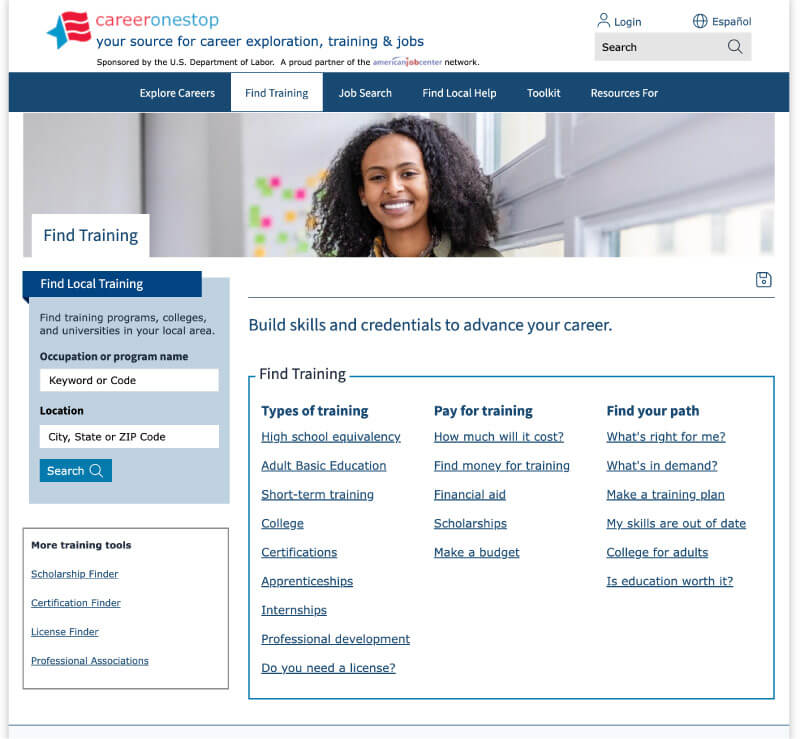
I don't care if the school is "FMCSA Approved." I don't care if they have 5-star reviews on Google. If they aren't on the state's specific vendor list, WIOA cannot pay them. No exceptions.
- In Texas: Don't just look at schools in Houston; look at the WorkInTexas approved vendor list.
- In Florida: Check the Employ Florida marketplace before you even visit a campus in Jacksonville — full steps in our Florida CDL guide.
- In California: Use the CalJOBS search tool.
- In Arizona: Search the Arizona@Work ETPL before enrolling — see our Arizona CDL guide.
- In Ohio: Use OhioMeansJobs and check eligibility in our Ohio CDL guide.
Insider Note: Many heavily advertised "express" 1-week courses are banned from the ETPL because their graduation stats are too low. WIOA usually favors the longer, accredited 160-hour programs.
3. Are You Actually Eligible? (The Fine Print)
Most people think this funding is only for the unemployed. That's wrong. The law (Public Law 113-128) defines three very specific buckets. You need to fit into one of them perfectly.
The "Dislocated Worker" (The VIP Ticket)
This is the priority tier. You bypass most income tests if:
- You have a separation notice (Pink Slip) and are eligible for Unemployment Insurance.
- You are a victim of a plant closure (WARN Act notice).
- You were self-employed but are now unemployed due to economic conditions.
- You are a "Displaced Homemaker" (you lost the income of a spouse due to divorce/death).
The "Low-Income Adult" Loophole
If you are currently working a dead-end job, you might still qualify. If your wages are below the "Self-Sufficiency Standard" for your county (often around $15-$18/hour), you can argue for "Skills Upgrading." You aren't asking for a handout; you are asking to move from a low-wage tier to a High Demand Occupation. This argument works incredibly well in industrial hubs like Atlanta or Chicago.
Youth (16-24)
If you are out of school, you generally need a "barrier to employment" to qualify, such as being a dropout, having a criminal record (Justice system involvement), or being in foster care.
4. Building Your "Demand File" (The Hack)
If you walk into your interview empty-handed, you will likely be denied or delayed. You need to build what I call a "Demand File."
The "Pre-Hire Letter" Strategy
Case Managers are terrified that you won't find a job. You can remove that fear instantly. Before your intake interview, call two or three local trucking companies (look for dump truck outfits, beverage distributors, or local fleets). Ask them: "I am applying for a state grant to get my CDL. Would you be willing to sign a non-binding Letter of Intent saying you would interview me once I'm licensed?"
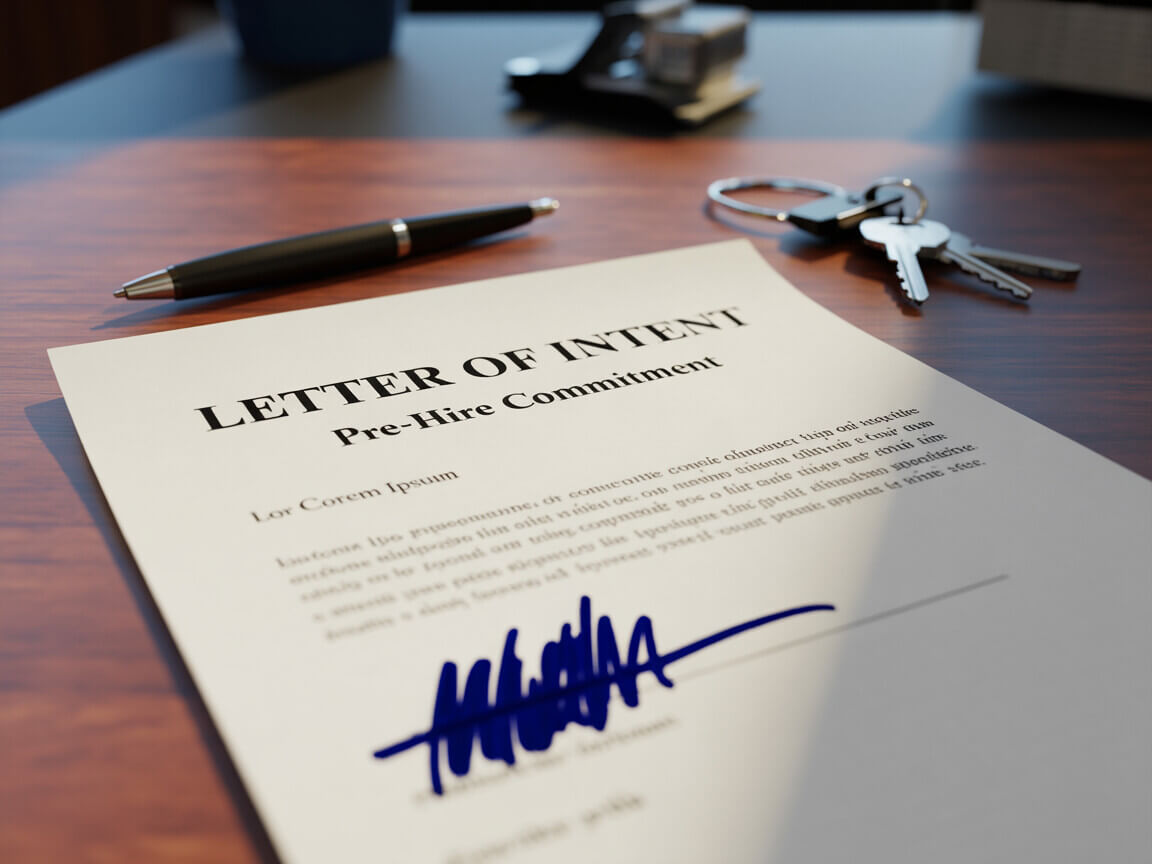
Most will say yes. If you walk into your WIOA interview and slap two "Letters of Intent" on the desk, it is almost impossible for them to deny you. You have proven the ROI.
The Mandatory Documents Checklist
Don't let them send you home for missing paper. Bring these on day one:
- Selective Service: If you were born male after Jan 1, 1960, go to sss.gov and print your registration proof. No registration = Automatic Denial.
- Driver's License & SS Card.
- Proof of Residency: Utility bill or lease.
- DD-214: If you are a Veteran (you get priority service).
- Layoff Notice or Pay Stubs.
5. The Interview Cheat Sheet
When the Case Manager asks questions, they are testing your "Employability." Do not improvise.
When they ask: "Why do you want to be a truck driver?"
- Don't say: "I like to travel and I need money." (This sounds like a tourist).
- Do say: "I have analyzed the local Labor Market Information (LMI). There is a structural shortage of drivers in this county. This is a trade that allows me to transition off unemployment and become a tax-paying citizen within 5 weeks."
When they ask: "Why this specific school?"
- Don't say: "It's close to my house."
- Do say: "I selected this provider because they are ETPL-compliant and have a 90% placement rate. They also offer manual transmission training, which removes the 'E' restriction from my license and makes me hireable by 100% of carriers."
6. The Timeline Reality Check
Recruiters lie about the speed. They want you in class next Monday. Realistically? The WIOA process takes 30 to 60 days.
- Orientation: You watch a mandatory video.
- The TABE Test: Yes, you have to take a math and reading test. You typically need an 8th-grade level (per DOT regulations for reading logs). Brush up on your fractions.
- Background Check: If you have a DUI in the last 5 years, stop now. WIOA often won't fund you because no insurance company will hire you.
- The ITA Voucher: Once approved, the state issues an Individual Training Account voucher directly to the school. You never touch the money.
Bottom Line
The government has the money. In 2026, the caps are high—often covering the full cost in states like Texas (for Hazmat drivers) or California.
They want to spend this money. But they won't give it to people who treat it like a scholarship. They give it to professionals who treat the application process like a job interview. Prepare your Demand File, get your pre-hire letters, and don't take "no" for an answer from the front desk.
Ready to Find CDL Schools?
Search for CDL training programs in your area. Start your journey to becoming a professional truck driver today.
Find CDL Schools Near You