
TWIC Card Explained (2026): Cost, Timeline, Disqualifying Offenses & Hazmat
Do you actually need a TWIC card? The straight answer on cost, how long it takes, what disqualifies you, and how it overlaps with the Hazmat endorsement.
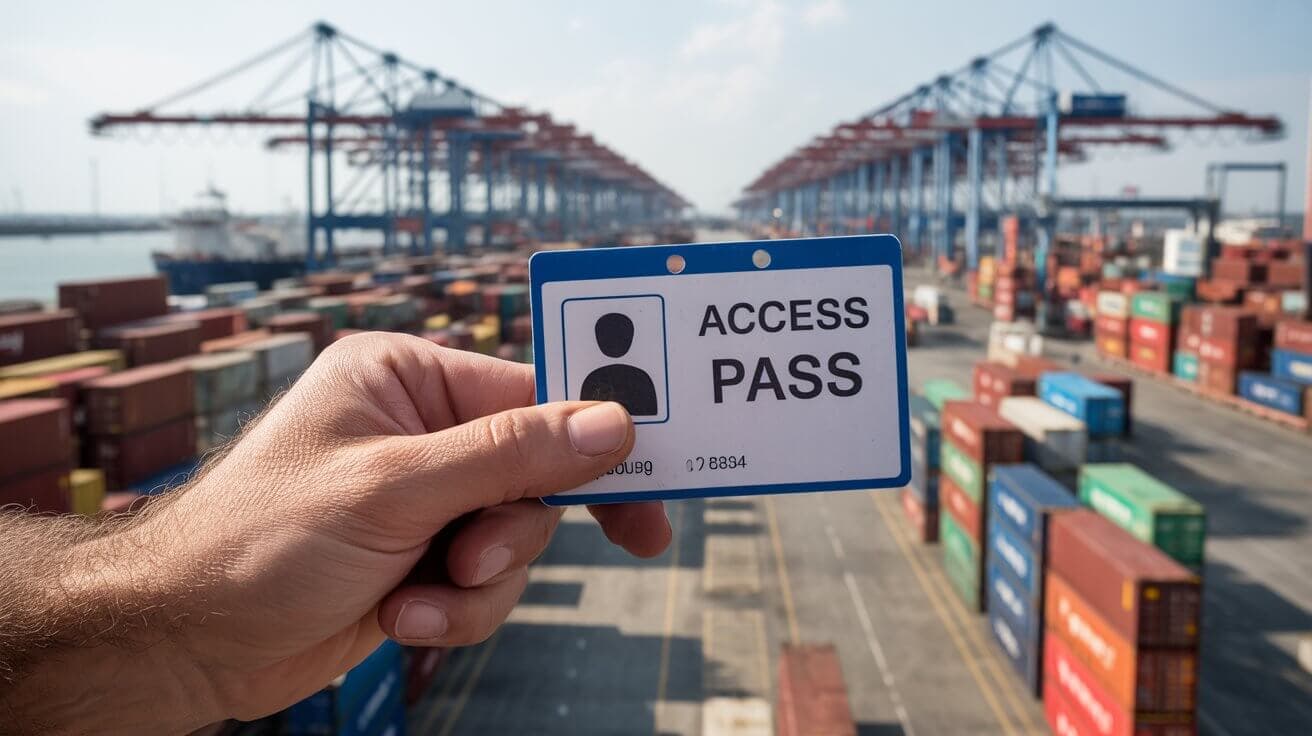
Half the drivers searching for a TWIC card don't actually need one. The other half need it and have no idea how long the government will take. Let's fix both.
Drivers miss out on high-paying port loads for the most avoidable reason imaginable: a TWIC card that quietly expired while they weren't watching. Getting the card is easy. Remembering to renew it before it lapses, in the middle of a busy season, is where people actually get burned.
The TWIC card, short for Transportation Worker Identification Credential, is a federal ID issued by the TSA that proves you've passed a security background check and can enter secured areas of ports and maritime facilities. If your routes touch a port, you need it. If they don't, you may be paying for a credential you'll never use.
Because the TSA runs both the TWIC and the Hazmat background check, drivers constantly confuse the two. This guide gives you the straight answers: who actually needs a TWIC, what it costs, how long it really takes, what disqualifies you, and how it connects to your Hazmat endorsement. For the full menu of endorsements, see our CDL Endorsements Guide.
1. Do You Actually Need a TWIC Card?
You need a TWIC if your job requires unescorted access to secure port or maritime areas. That includes drayage drivers, port haulers, and anyone delivering to or picking up from a marine terminal.
The Key Distinction: A TWIC card is NOT required to get a Hazmat endorsement, and a Hazmat endorsement does NOT require a TWIC. They are two separate credentials. You only need a TWIC if you physically enter secured port facilities. Don't let a recruiter upsell you on a credential your routes will never use.
If you're chasing port drayage work in hubs like Houston, Los Angeles and Long Beach, Savannah, or the Jacksonville terminals, the TWIC is non-negotiable. For dry van or regional freight that never sees a port, skip it.

2. TWIC vs. Hazmat: Why People Confuse Them
Both credentials are issued by the TSA, both require fingerprinting at an enrollment center run by IdentoGO, and both run the same type of Security Threat Assessment against criminal and terrorism databases. That shared background check is the source of all the confusion.
The upside of that overlap is real money. If you already hold one, you may qualify for a reduced fee on the other, because the TSA isn't running an entirely new check from scratch. If your career plan includes both port access and hazardous freight, applying strategically can save you both time and cost.
3. Cost & Timeline
| Item | Detail |
|---|---|
| Standard fee | $125.25 (reduced to $93 with a valid HME or FAST card) |
| Validity | 5 years |
| Processing time | Often a few weeks, longer if the check flags a review |
| Enrollment | Pre-enroll online, then fingerprint in person at an IdentoGO center |
The number one mistake is applying after you've accepted a port job. The background check runs on the government's clock. Apply the moment you know port work is your target, not the week before orientation.
4. Disqualifying Offenses
The TWIC uses the same permanent and interim disqualifying-offense framework as the Hazmat Threat Assessment. Permanent disqualifiers such as espionage, terrorism, and sedition bar you outright. Interim disqualifiers, certain felonies within a recent window, create a temporary bar that may be appealable.
If You Have a Record: A past conviction doesn't automatically end your shot. The TSA offers a waiver and appeals process for many interim disqualifiers. Pull your own background information before you apply, and understand the timeline. The same disqualification logic that governs CDL medical and security standards is explained in our CDL Disqualifications Guide.
5. How to Renew Your TWIC Card
A TWIC card is valid for five years, and renewal is the single most-searched TWIC topic for a reason: drivers wait until the last minute and risk losing port access mid-contract. Here's the process.
- Start 60 to 90 days before your card expires. You'll get renewal notices, but don't rely on them.
- Pre-enroll online through the TSA Universal Enroll system, selecting renewal rather than a new application.
- Pay the renewal fee (often lower than the first-time fee).
- If required, visit an IdentoGO center to update fingerprints or photo. Some renewals can be done largely online.
- Activate and pick up the new card when notified, either by mail or at the enrollment center.
Set a reminder a few months ahead. Losing access while you're under a port haul contract can cost you real money in missed loads, and there's no way to rush a lapsed credential back into service.
6. How to Enroll for the First Time (Step by Step)
If this is your first TWIC, the process mirrors renewal but adds a full background check:
- Pre-enroll online and provide your identity and citizenship information.
- Book an in-person appointment at an IdentoGO enrollment center near you.
- Bring required documents (passport or birth certificate plus a government photo ID), get fingerprinted, and have your photo taken.
- Pay the enrollment fee.
- Wait for the Security Threat Assessment to clear, then activate and collect your card.
7. How to Check Your Application Status
You can track your TWIC application online through the Universal Enroll portal using the reference number from your enrollment receipt. If the status sits in review for several weeks, it usually means the background check found a record match it needs to verify, not an automatic denial. Call the enrollment center's help line if it stalls beyond 30 days.
8. Lost, Stolen, or Damaged Card
If your TWIC is lost, stolen, or damaged, report it and order a replacement through the Universal Enroll system. Because you've already cleared the background check, a replacement is faster and cheaper than a new application, and you keep your existing expiration date. Don't drive into a secured facility without the physical card, since access is denied without it regardless of your cleared status.
Frequently Asked Questions
How long does it take to get a TWIC card?
Processing usually takes a few weeks, though it can run longer if the background check flags a review. Apply well before you need the card, ideally 4 to 6 weeks out.
How much does a TWIC card cost?
The standard fee is $125.25 for a five-year card, reduced to $93 if you hold a valid Hazmat endorsement (HME) or Free and Secure Trade (FAST) card. A lost, stolen, or damaged card costs $60 to replace.
Do I need a TWIC card for a Hazmat endorsement?
No. The two are separate credentials. You need a TWIC only if your routes require access to secured port or maritime facilities.
How long is a TWIC card valid?
A TWIC card is valid for five years, after which you renew through the same TSA enrollment process.
The fees, distances, and procedures in this guide were fact-checked against the official TSA TWIC program and last reviewed in June 2026. Fees and state-specific steps change, so always confirm the current details with your state DMV before you apply.
The Bottom Line
The TWIC is simple once you cut through the confusion. It's a port-access credential, separate from Hazmat, valid for five years, and worth getting early if port work is your goal. If your freight never touches a marine terminal, you don't need it.
Your Action Plan:
- Confirm your target jobs actually require port access before paying.
- If you also want Hazmat, plan both checks together to save on fees.
- Pull your own record first if you have any criminal history.
- Pre-enroll online, then book your fingerprint appointment early.
Ready to start? Find CDL schools near major port hubs in our national directory, or see how the TWIC fits the bigger picture in our CDL Endorsements Guide.
External Resource: Official TSA TWIC Program.
Ready to Find CDL Schools?
Search for CDL training programs in your area. Start your journey to becoming a professional truck driver today.
Find CDL Schools Near YouRelated Articles

Doubles/Triples (T) & the Air Brake Restriction (2026): The Quick Wins
The Doubles/Triples endorsement is one written test that opens LTL freight. And the air brake (L) restriction is the silent job-killer most new drivers never fix. Here is both.

Passenger (P) & School Bus (S) Endorsements (2026): The Class B Driver's Path
The P and S endorsements turn a Class B license into steady, often-unionized work with paid training. The real guide to the tests, the background check, and the jobs.

Tanker Endorsement (N) Explained (2026): Surge, Pay & the X Combo
The Tanker endorsement is a written test with no background check that pays nearly as well as Hazmat. Learn surge and baffles, why it pays, and how to stack the X combo.